
Products
Published
28 January 2026
Written by Adam Yap Electronics Engineer / Digital & Technical Content Specialist
By Emmie McRae
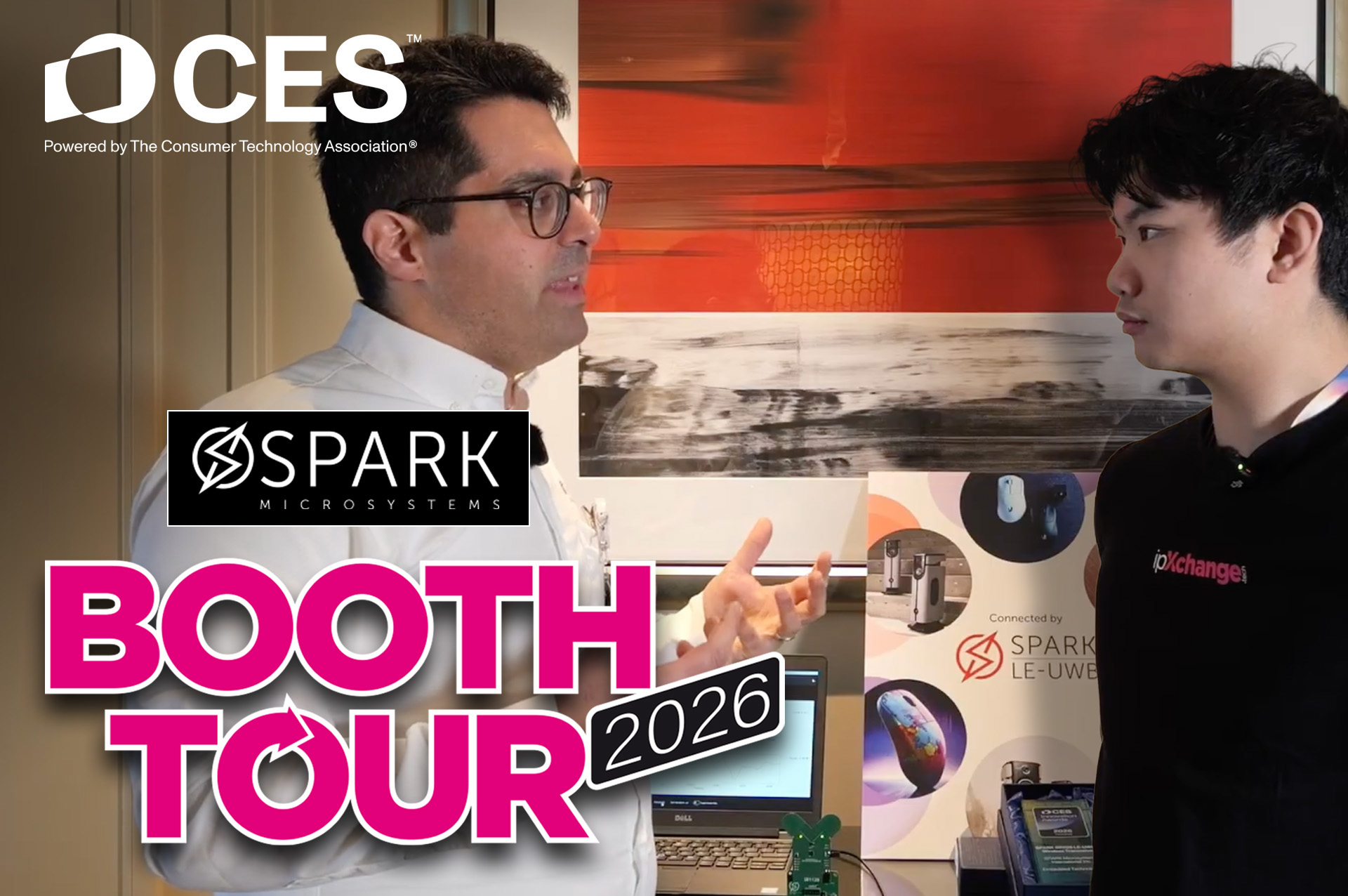
At CES 2026 in Las Vegas, Spark Microsystems unveiled an ultra wideband transceiver that challenges the fundamental limitations of Bluetooth and Wi-Fi for short-range connectivity. The system has already been recognised with a CES 2026 Innovation Award.
Modern wireless systems are being pushed far beyond their original design intent. Bluetooth and Wi-Fi were never built for ultra-low latency, high-throughput, interference-resilient, multi-device environments. As devices become more immersive, interactive, and data-heavy, these legacy technologies increasingly struggle to deliver reliable performance.
Spark Microsystems’s ultra wideband transceiver directly targets these limitations.
Built for Low Latency
One of the defining characteristics of Spark’s system is latency. The transceiver delivers sub-millisecond latency, enabling use cases that are fundamentally impossible with conventional wireless stacks. In the demos, Spark showed ultra-low latency gaming controllers, wireless headsets, and real-time audio streaming systems operating with less than 5 milliseconds of end-to-end delay.
Human perception is extremely sensitive to latency in audio, control systems, and immersive interfaces. Sub-millisecond communication enables natural interaction models for gaming, XR, wearables, and human-machine interfaces that feel instantaneous rather than delayed.
Interference-Free Wireless in Real Environments
CES is one of the harshest RF environments in the world, packed with Wi-Fi routers, Bluetooth devices, access points, and wireless noise. In this environment, Spark demonstrated a direct comparison between a commercial gaming headset and a reference headset built using Spark’s ultra wideband transceiver.
When Wi-Fi interference was introduced, the commercial headset suffered dropouts, distortion, and instability. Spark’s reference headset remained completely unaffected, delivering clean, uninterrupted audio even next to an active Wi-Fi router.
Interference robustness is critical for real-world deployments in homes, offices, factories, gaming environments, and public spaces where RF congestion is unavoidable.
High Throughput Without High Power
Spark’s system is designed for high data rates without sacrificing battery life. The transceiver enables simultaneous streaming of multiple data types, including audio, microphone input, controller data, sensors, and control signals, through a single wireless link.
Spark showcased a full gaming setup where a controller, microphone, audio output, and wireless speaker were all operating through a single ultra wideband dongle, with no noticeable latency and no interference issues.
At the same time, the platform supports ultra-low-power operation. Active tags demonstrated continuous high-frequency polling while running for years on a standard coin cell battery, something that is practically impossible with conventional wireless protocols at similar update rates.
Enabling New Wireless Architectures
Rather than replacing Bluetooth or Wi-Fi directly, Spark Micro’s ultra wideband transceiver enables a new class of wireless architecture focused on:
- Ultra-low latency peripherals
- Interference-resilient connectivity
- High-throughput short-range communication
- Multi-device wireless hubs
- Wearable systems
- Gaming and XR devices
- Immersive interfaces
- Precision tracking systems
- Wireless control platforms
- Sensor networks
- Audio systems
- Human-machine interfaces
This technology enables entirely new system designs where latency, reliability, and interference are no longer fundamental constraints.
A Platform for Engineers
Spark Microystems is positioning this as a developer-accessible platform. Engineers can access evaluation kits, software development kits, and reference designs to build directly on the technology.
This makes it viable for real product development across industries including gaming, wearables, industrial systems, XR, audio hardware, medical devices, and immersive computing platforms.
Comments are closed.
Comments
No comments yet