LIGNA’s Ultra-Thin Supercapacitors Tested!
When you think of energy storage, bulky lithium-ion cells or cylindrical aluminium electrolytic capacitors probably come to mind. But what if energy storage didn’t have to be so rigid—literally? Enter LIGNA’s ultra thin supercapacitors: flexible, compact, and sustainable components that open new design possibilities for engineers working in wearables, smart cards, and embedded IoT.
Available in 60mF (19.0 x 22.0 x 0.4 mm) and 1.2F (30.0 x 42.0 x 0.45 mm), rated to 2.7V, these components deliver substantial energy storage in an ultra-thin profile—less than 0.5mm thick. That’s the kind of footprint that fits inside a bank card without compromising form or function.
Click here and apply to begin evaluating.
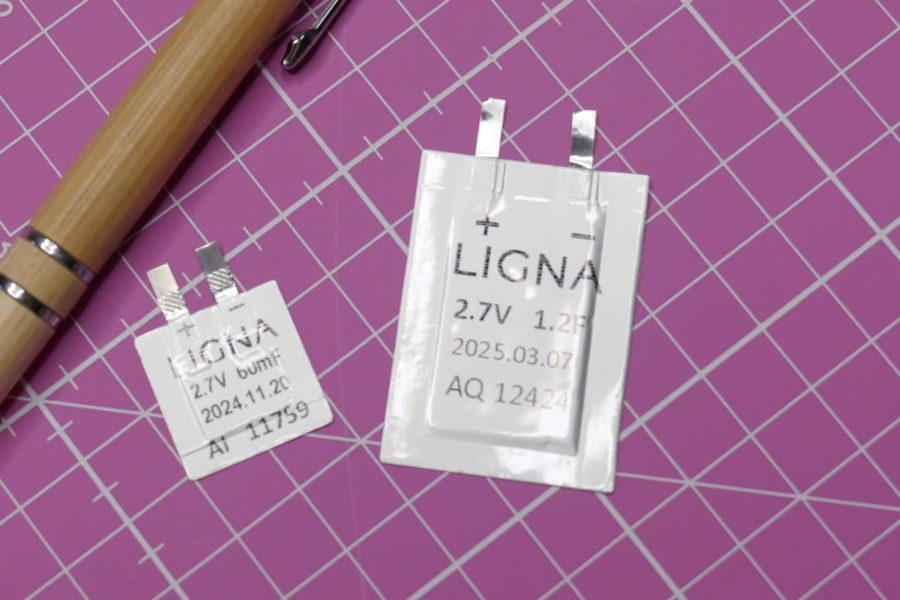
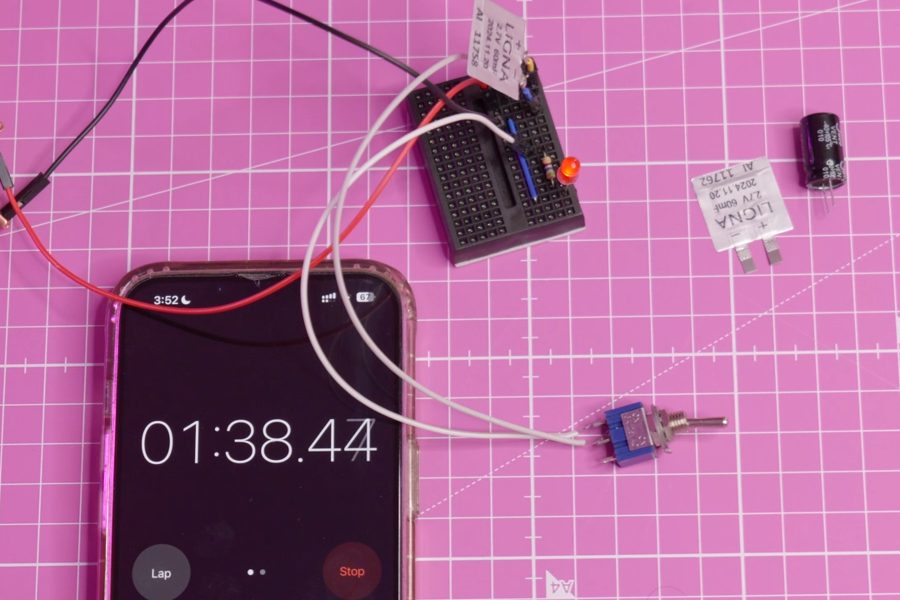
Why does this matter? Because supercapacitors offer something batteries can’t: rapid discharge and charge cycles, long operational lifetimes, and safe, non-toxic construction. But traditional supercapacitors come in bulky cans. Not anymore. In our latest video, we put their energy density to the test.
Undeniable Smart Card Applications
LIGNA’s supercapacitors shine in smart card applications where power delivery is intermittent. NFC-enabled cards typically receive power from a reader, but next-generation cards demand more. Imagine a payment card with a display that shows your current balance, a biometric sensor for secure checkout, or a reprogrammable hotel key with your room number, checkout time, and a built-in “Do Not Disturb” button.
These applications require a compact energy buffer that fits within the card and operates safely—no batteries, no fires, no toxic electrolytes. LIGNA’s solution checks every box.
Environmental Impact
Even better, these capacitors are environmentally friendly. LIGNA’s super-capacitors are constructed from lignin (forestry industry by-product) and coconut husks!. It’s a rare case of an electronics component being not only recyclable but fundamentally rooted in a renewable resource.
Interested in Evaluating LIGNA Ultrathin Supercapacitors?
Engineers working in embedded and wearable systems can integrate these components as local energy storage for low-voltage IoT devices, edge sensors, or medical patches that demand intermittent power or short bursts of energy.
If you’re building for flexible electronics, sustainable design, or constrained form factors, LIGNA’s ultra-thin supercapacitors are worth a closer look. They offer a safe, scalable, and environmentally responsible alternative to legacy energy storage—perfect for the next wave of smart, connected devices.
📌 Interested in evaluating them? Click here and apply to begin evaluating.
New tech, live sessions and free boards.
The ipXchange newsletter. Sent only when it fits your job role, your company and what you are building.