
Solutions
Published
16 December 2025
Written by Yunus Unal Mechatronics Engineer and Content Specialist
Yunus is a mechatronics engineer with a background in 5G mobile communications and intelligent embedded systems. Before joining TKO and ipXchange, he developed and tested IoT and control-system prototypes that combined hardware design with embedded software. At ipXchange, Yunus applies his engineering knowledge and creative approach to produce technical content and product evaluations.
In low power embedded systems (e.g. coin-cell sensors or always-on sub-circuits), conventional wisdom about regulator efficiency can flip: a low-dropout (LDO) regulator might outperform a switching voltage regulator at sub-100µA loads.
At these ultra-low currents, a regulator’s quiescent draw and light load behaviour dominate. Buck converters often need a few microamps (or more) just to operate, whereas modern LDOs can stay alive on just tens of nanoamps.
In practice, at very light loads, LDOs can sometimes be more efficient than buck converters due to the overhead of the buck converter’s control circuit. In other words, for tiny loads and small voltage drops, a small Vin/Vout LDO can waste almost no power, while a buck’s static current or pulse skipping saps battery life.
LDO vs Buck Converter: A Contrast in Sweet Operating Spots
Buck converters shine at high currents and large Vin-Vout differences – they can often reach efficiency of up to 95% when supplying several mA. In contrast, an LDO’s efficiency is simply expressed by
η ≈ Vout / Vin
so it loses (Vin – Vout) × Iout as heat. At first glance, an LDO looks inefficient when Vin > Vout. However, if the load current is extremely small (µA or less), the power loss (Vin – Vout) · Iout becomes negligible. Meanwhile, a buck converter’s efficiency suffers at light load if its quiescent current (Iq) is comparable to the load.
Modern LDOs can achieve Iq in the nanowatt range, whereas even a ‘low Iq’ buck converter typically needs hundreds of nanoamps or more in light load or pulse modes. Some buck regulators improve light-load efficiency by skipping switching pulses or entering burst mode, but they still typically consume a non-negligible baseline current. Even with low Iq modes, buck converters might switch intermittently to maintain regulation, wasting energy. In contrast, an LDO simply draws its tiny Iq continuously and remains in steady analogue control, which can be far lower than a buck converter’s intermittent switching losses at the same current.
In addition, LDOs have inherently low output noise and excellent Power Supply Rejection Ratio (PSRR). At micro-power levels, avoiding switching spikes is often critical. Using an LDO avoids the need for extra filtering in noise-sensitive sub-circuits.
Quiescent Current (Iq) and Light Load Behaviour
At currents below 100µA, the most important regulator specifications are:
- Quiescent current
- Light-load operation
Many modern ‘nano-power’ LDOs specify Iq down to the nA range. For example, the Texas Instruments TPS7A02 (200mA LDO) has only 25nA typical Iq. STMicroelectronics’ new STLQ020 (200mA LDO) draws as little as 300nA. Even modest LDOs often specify Iq of less than 1µA. This means that when the output is lightly loaded (10-100µA), almost all of the input power goes to the load, not to the regulator overhead. (Of course, LDO dropout voltage must still be taken into account, but many modern LDOs feature a very low dropout voltage even at low currents.)
A cutting-edge microbuck converter such as TI’s TPSM82843x (600mA) advertises 275nA operating Iq, which is comparable to the LDOs above. TI’s TPS62840 (750mA) features Iq of around 60nA. The TPS62840/43 series have Iq values between 60nA and 1500nA, and the TPS6282x/A series have Iq values between 4µA and 8mA. However, many buck parts still draw several µA at no load. Worse, a buck converter can go into a 100% mode, with the FET always on, and behave like an inefficient resistor. An LDO on the other hand still regulates if dropout is sufficient.
At light load, some buck converters enter discontinuous conduction mode (skipping cycles), leading to higher ripple or slower response. LDOs remain in linear regulation, giving clean output even for sudden nA-to-µA load changes. Beyond the regulator’s Iq value, consider the system standby current. Many MCUs and sensors have standby consumption in the low µA or nA range when in deep sleep. To take full advantage of this, the regulator feeding them must also be a low-power device. Using an LDO with nanoamp Iq ensures the regulator does not wake up the sleeping MCU by itself.
Design Scenarios In Which LDOs Dominate
In practice, several common embedded scenarios make an LDO clearly preferable.
For instance, devices running on one or two coin cell batteries typically have quiescent current in the tens of microamps (or much less). With a low Vin-Vout differential, an LDO can regulate with minimal Iq and virtually no switching losses. By contrast, a switching buck converter such as the TI TPS62840 can run from a single lithium cell on an input down to 1.8V, but it still draws Iq of 60nA and has switching activity at light loads.
Many sensors or analogue front ends draw very low current except when sampling. If their supply can be a clean, low-noise LDO input, the regulator’s Iq becomes part of the idle power budget.
Modern low-power MCUs (such as the STM32Lx, EFM32, or nRF series) can sleep at well below 1µA. To take advantage, the main regulator feeding the MCU must not draw more than that. An LDO with nanoamp Iq (with its enable pin turned off in sleep) ensures that when the MCU is in deep sleep, the system current stays low.
By contrast, a buck converter might keep pulsing at low loads unless it is specially designed for µA standby current.
In system blocks that wake up only occasionally, design guides often suggest the use of a fast wake-up oscillator to keep the core in complete power-down; an LDO can support ultra-fast wake without the large control overhead of a switcher.
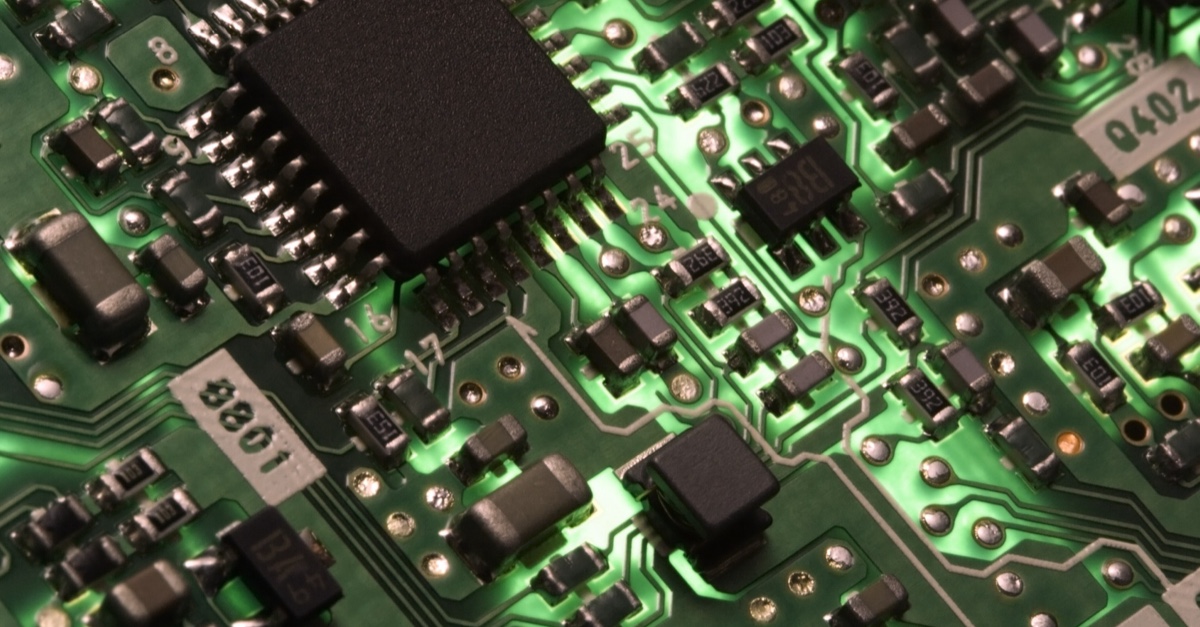
In always-on or event-driven sensor nodes, the MCU might sleep most of the time and wake to measure or transmit briefly. Here the regulator often runs in near to an idle mode. The use of an LDO simplifies the design (fewer components, no inductor) compared to a buck converter, and minimises leakage. For example, tiny IoT beacons or industrial sensors often just use one LDO (or a buck plus LDO) to provide all rails.
Where electromagnetic noise must be minimized, such as in RF front ends, precision ADCs, and PLLs, an LDO’s clear, noise-free output is an advantage. Some architectures combine a buck converter followed by an LDO: the buck converter is coarse down-conversion, and the LDO for a final clean supply. In a microamp regime, even an LDO on its own is often enough, since the absolute power is low and an LDO’s dropout is minimal if Vin ≈ Vout.
The above discussion is supported by vendor datasheets and application notes. Recent MCU announcements from NXP, Renesas, Silicon Labs and others on sleep modes, highlight the trend to minimize sleep current – a goal more easily met when the power rails themselves draw nanowatts.
In summary, for embedded designs in which the steady state or standby current is under ~100µA, carefully evaluate an LDO-first approach. Choose regulators with low Iq, plan for clean enable/disable thresholds, and pay attention to all leakage paths. In these regimes, ‘efficiency’ means minimizing quiescent and leakage losses: this is often where an LDO wins over a buck converter.
You must be signed in to post a comment.
Comments
No comments yet