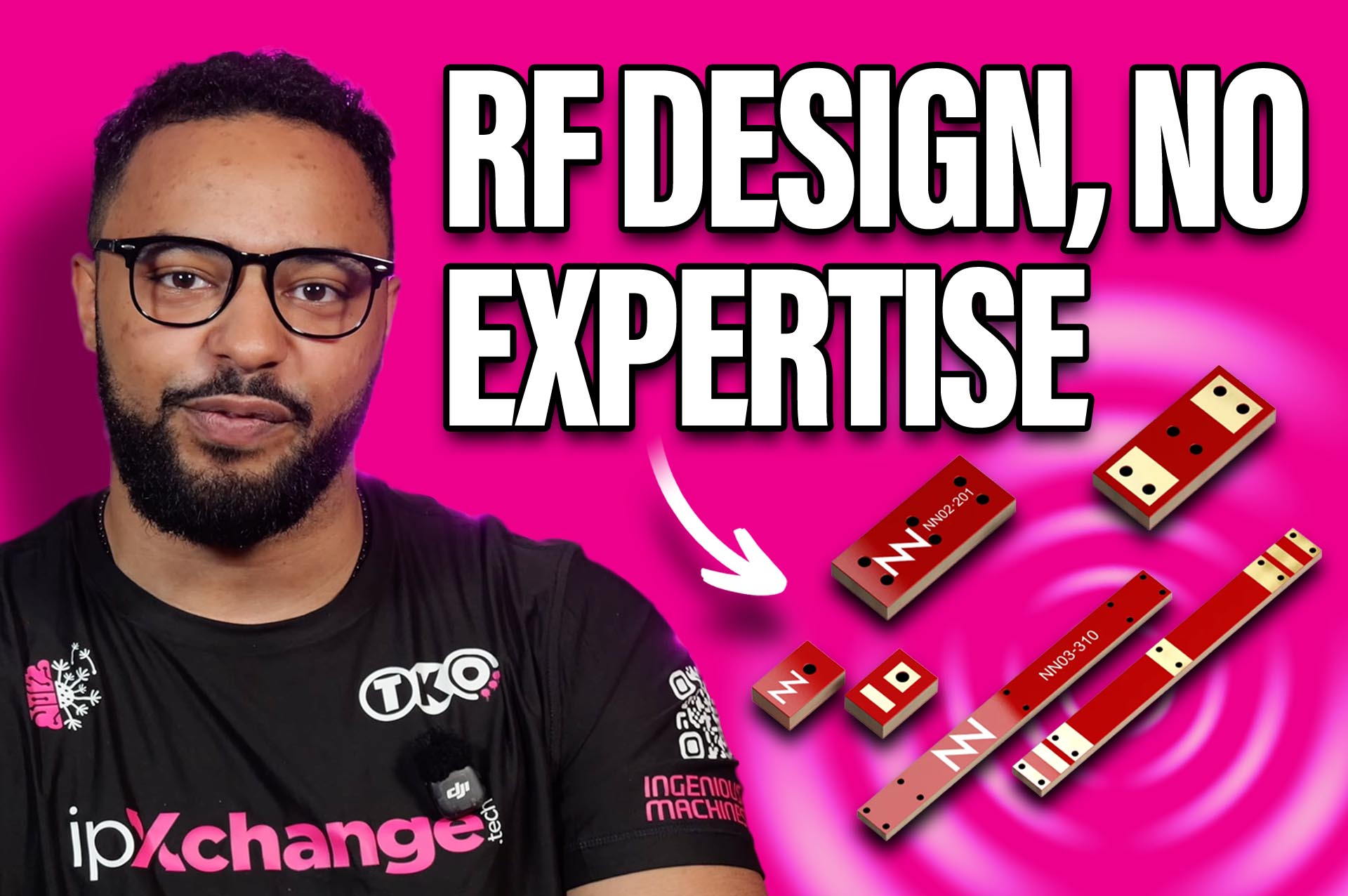

From smart wearables to industrial IoT devices, wireless connectivity is becoming an essential part of modern electronics. However, integrating an antenna into a compact product is not always straightforward. PCB dimensions, component placement, batteries and even the device enclosure can significantly affect RF performance.
We visited Ignion at its Barcelona headquarters to explore how its Virtual Antenna technology, Oxion design platform and RF engineering services are helping engineers tackle these challenges, from initial concept through to pre-certification.
Why an Antenna-First Approach Matters
Antenna integration is often treated as one of the final stages of product development. Unfortunately, discovering poor RF performance after a PCB has been manufactured can lead to expensive redesigns and delayed product launches.
Ignion advocates an antenna-first approach, encouraging engineers to consider antenna placement, PCB geometry and surrounding components from the beginning. Its Virtual Antenna technology uses a compact, non-resonant antenna booster to excite the PCB ground plane, which acts as the primary radiating element. A matching network determines the operating frequencies and optimises performance for the intended application.
Unlike antennas designed around a fixed resonant frequency, this approach allows engineers to adapt the same booster component to different frequency bands by changing the matching network. Ignion’s portfolio covers applications from 400 MHz to 10.6 GHz, including cellular, GNSS, Wi-Fi and Bluetooth connectivity.
Oxion: Simplifying Antenna Integration with AI
To make RF design more accessible, Ignion developed Oxion, its AI-powered antenna integration platform.
Engineers can enter their PCB dimensions, select their required wireless technologies and explore suitable antenna configurations before manufacturing their first prototype. Oxion provides estimated antenna efficiency, S11 performance, placement recommendations and suggested matching networks.
Designers can then incorporate these recommendations into their PCB design and submit Gerber files for validation. This helps identify layout problems early, particularly for development teams without dedicated RF engineers.
From Simulation to RF Testing and Certification
Software simulations are only part of the process. At Ignion’s RF laboratory, engineers perform physical testing to evaluate how antennas behave inside real devices.
During our visit, we explored its anechoic chamber, where engineers measure antenna efficiency and conduct over-the-air (OTA) testing. This includes Total Radiated Power (TRP), which measures transmission performance, and Total Isotropic Sensitivity (TIS), which evaluates reception.
Ignion also provides noise analysis and debugging services to identify interference between components, helping engineers resolve RF problems before formal certification testing.
Putting Virtual Antenna Technology into Practice
One example featured during our visit was Amptech’s smart cane for visually impaired users. The device integrates cellular and GNSS connectivity using Ignion’s RUN and DUO antenna boosters.
When the original design encountered GNSS performance issues, Ignion provided recommendations for antenna placement and matching network topology. The subsequent generation also incorporated Wi-Fi connectivity using its compact NANO antenna booster.
The project demonstrates why antenna integration involves more than selecting the right component. Antenna placement, matching networks and the surrounding electronics must work together to deliver reliable wireless connectivity.
Watch Our Visit to Ignion
As connected devices become smaller and more complex, RF integration presents an increasingly important challenge for electronics engineers. Ignion’s combination of Virtual Antenna technology, AI-assisted design and RF engineering support provides a way to address these challenges throughout product development.
Watch our full IP Exchange interview and laboratory tour to discover how Ignion is making antenna integration more accessible, and visit https://ignion.io/ to explore its products and engineering services.
Comments are closed.
Comments
No comments yet