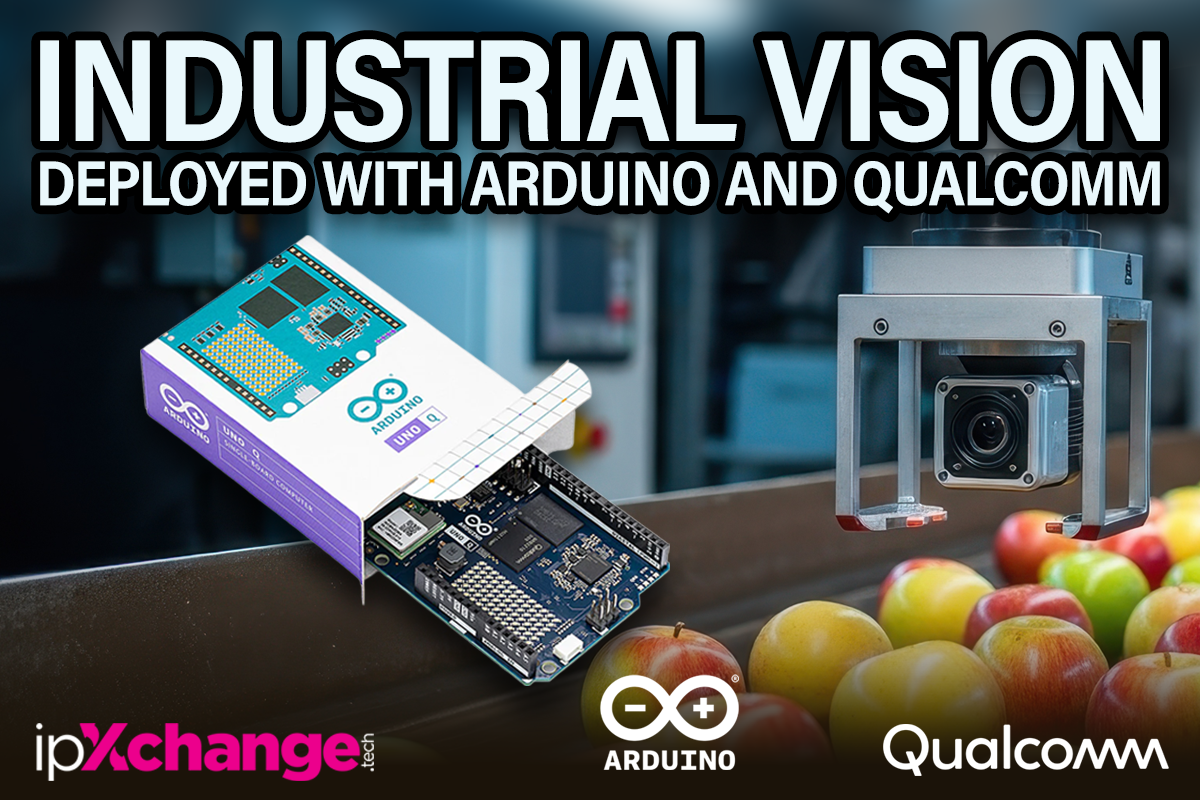

There’s been a lot of buzz around using machine vision and anomaly detection on edge devices for industrial use cases: think automating fault inspection or simply counting the number of components on a conveyor belt. Yet often engineers building these systems need to wrestle with complex toolchains or overkill platforms.
Why not choose a platform where you can train the model and trigger a physical action, without any of the associated complexity? That’s where the Arduino UNO Q is the answer.
In this webinar, we will explore the edge AI workflow from data curation, training, and deployment, on the accessible UNO Q platform, as well as dive into a real-world case study of how it can be used to control an automated robotic arm.
What you will learn:
- How to use Arduino App Lab to easily prototype and code applications making use of the UNO Q’s “dual-brain” architecture
- The workflow for training and deploying ML models using Edge Impulse on UNO Q
- A technical walkthrough of a camera-mounted robotic arm use case, and why the UNO Q was used.
- How to integrate AI inference with physical hardware.
- Best practices for implementing low-cost, efficient industrial vision.
Free